residential · Prince George, BC
Outlet Dead but the Breaker Isn't Tripped? Tracing a Live Junction Box Buried Behind Drywall
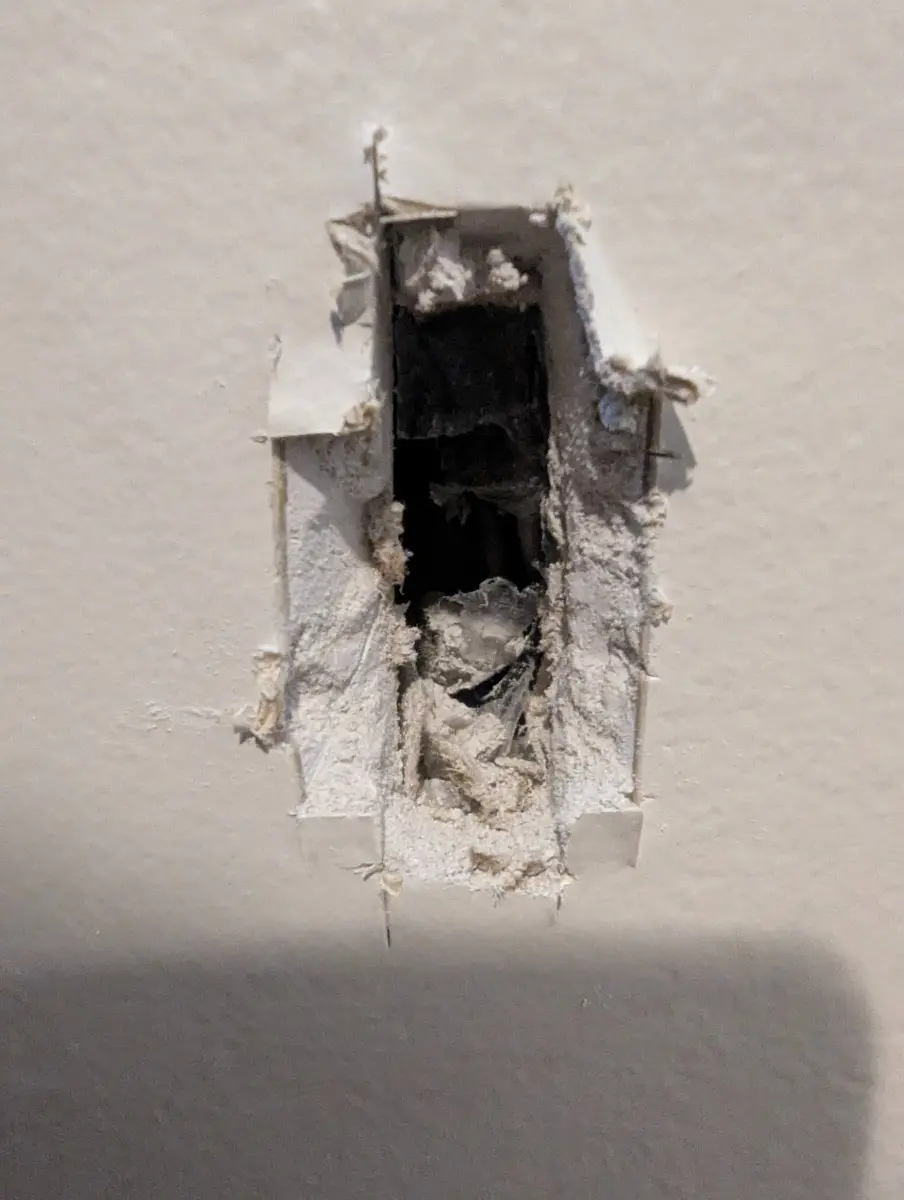
A service call came in for a single dead receptacle in a finished basement bedroom in Prince George. The homeowner had already done the sensible checks: no breaker was tripped, and another receptacle in the same room worked fine. One dead plug, no explanation.
The symptom that doesn't add up
At the panel, the breaker was delivering a clean 120V onto the circuit. Downstream, the receptacle read dead — zero volts, no neutral issues, nothing. That combination means exactly one thing: the conductor path is physically broken somewhere in the walls between the panel and that box.
This is the point where a hidden break tempts people into cutting exploratory holes in freshly painted drywall and chasing the cable by eye. There's a better way.
Signal tracing instead of guesswork
I connected an advanced circuit tracer (a Klein ET450) to the dead receptacle. The transmitter injects a specific frequency onto the dead conductor, and a receiver wand picks that signal up through the drywall, letting you walk the cable's exact path inside the wall.
I followed the signal along the bedroom wall — strong, strong, strong — and then it simply stopped. A signal that dies mid-wall marks the break within inches.
The discovery
Right where the trace ended, the wall had a very slight bulge under the paint — the kind of thing you'd never notice unless you were looking for it. A non-contact voltage tester against the drywall surface confirmed the suspicion: live 120V sitting directly behind the paint.
One small, surgical cut later, the story was clear. During the basement renovation, the drywallers had sheeted straight over a roughed-in electrical box. The finishing electrician never noticed the missing device, never tested the circuit, and left live conductors sealed inside a closed wall — an open splice point and a genuine fire hazard, invisible for years.
The fix
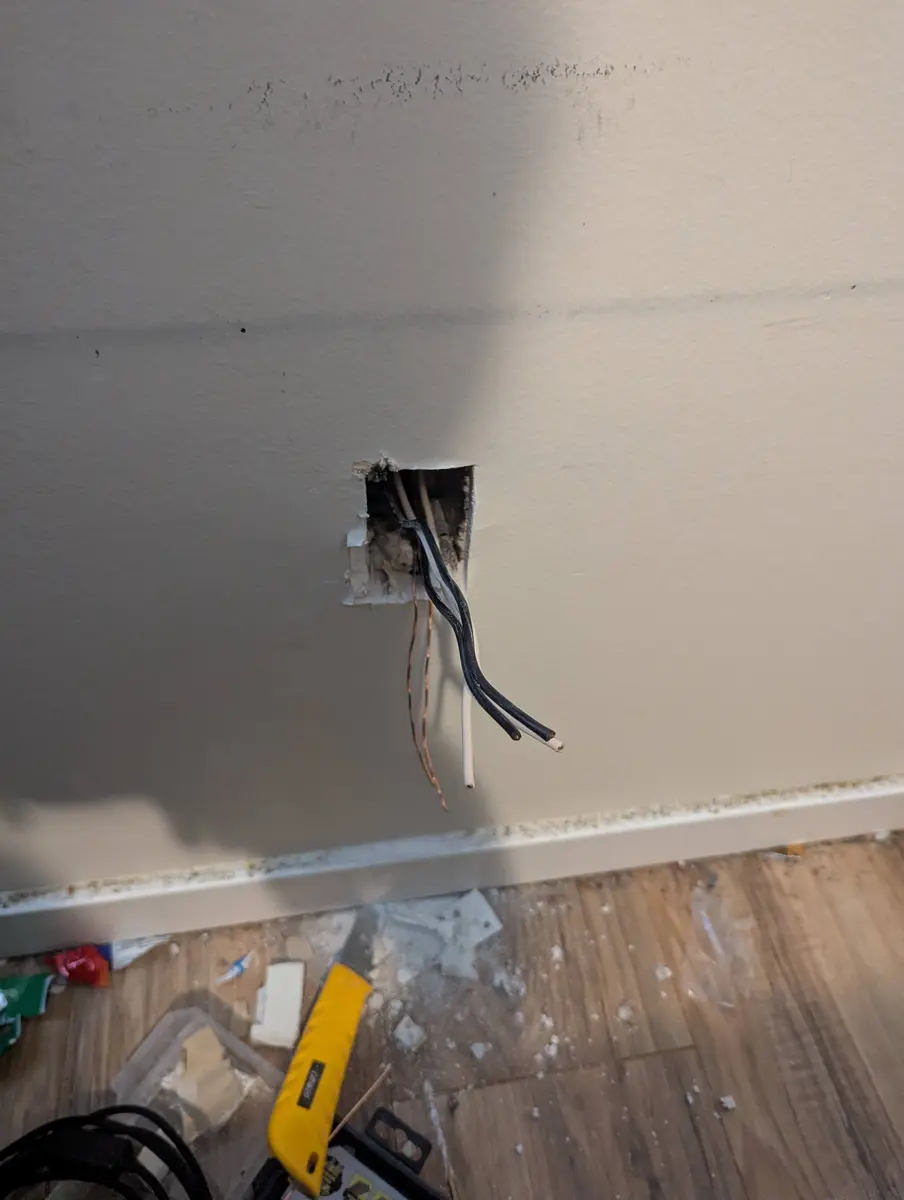
Because the trace located the buried box to the inch, the repair was one clean cut instead of a wall full of holes. I pigtailed the conductors properly, installed the missing receptacle, and power returned to the downstream outlet that had originally triggered the call.
What this job says about diagnostics
Renovations move fast, subcontractors overlap, and mistakes get buried — literally. The lesson isn't that renos are bad; it's that troubleshooting is not parts-swapping. The receptacle that was reported dead was never the problem. The problem was thirty feet away, sealed in a wall, energized the whole time.
Proper diagnostic tooling paid for itself here twice: it found a fire hazard nobody knew existed, and it kept a finished, painted room from being carved up on a hunch.
Got a problem like this one?
This is what a proper diagnostic looks like: find the actual fault, fix it once, and leave you with straight answers. Based in Prince George, serving northern BC.
Book a diagnostic visit Call (778) 349-9654Common questions
Why would an outlet be dead if the breaker isn't tripped?
It usually means the wiring path between the panel and that outlet is physically broken — a failed connection in a junction box, a damaged cable, or (as in this case) a live box accidentally sealed behind drywall during a renovation.
Can an electrician find a broken wire without cutting open the wall?
Yes. A circuit tracer injects a signal onto the dead wire and a receiver follows it through the drywall. It locates the break within inches, so the repair is one small cut instead of exploratory holes.
Is a dead outlet dangerous or just annoying?
Usually just annoying — but the cause can be dangerous. A failed or buried connection can mean live, unprotected wires inside the wall, which is a fire hazard. It's worth a proper diagnosis rather than ignoring it.

More case studies
- One Dead Fixture, One Still Burning — Replace One or Both? Here's the Math
- The Hot Tub GFCI That Kept Tripping — With No Ground Fault to Find
- Bathroom Fan Repair vs. Replace: Why the Expensive Motor Was the Cheaper Job
- A Breaker That Kept Tripping, Then Total Silence: Post-Mortem of a Melted Receptacle
- New Baseboard Heaters Won't Lower Your Hydro Bill: The Physics of Resistance Heat