residential · Prince George, BC
Bathroom Fan Repair vs. Replace: Why the Expensive Motor Was the Cheaper Job
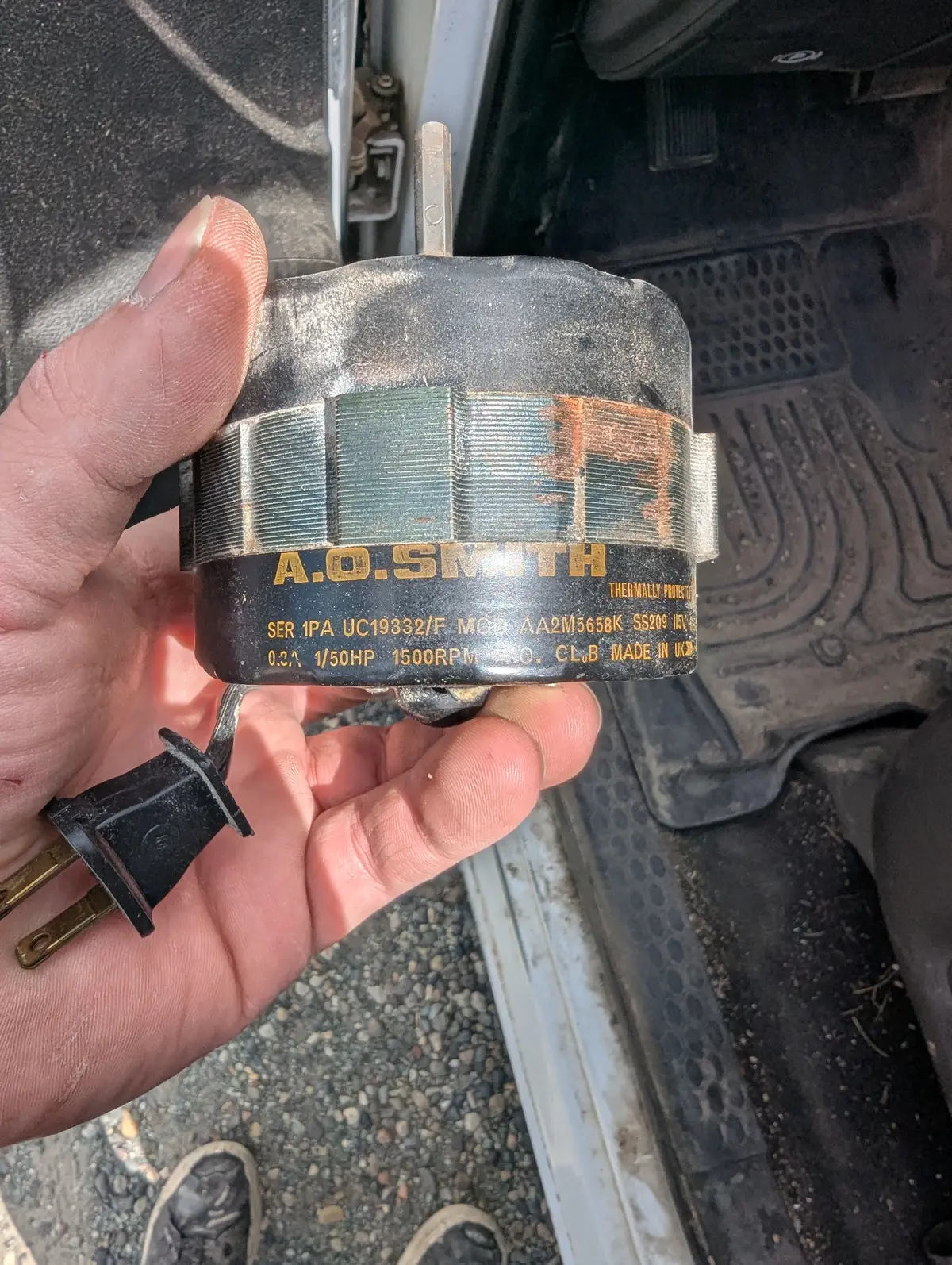
The failure was ordinary: a bathroom exhaust fan stopped moving air. The motor — an A.O. Smith 1/50 HP, 1500 RPM shaded-pole unit, plug-in style — had reached the end of its life.
The math most people get wrong
Here's the counterintuitive part: the replacement motor cost more than an entire new fan unit. On parts price alone, replacement looks obvious — rip out the old housing, put in a new fan.
But parts price isn't job price. A complete fan swap means pulling the old housing out of the ceiling, and old housings are nailed to joists, tied into duct with tape and sealant that has fused solid, and frequently sized differently than anything sold today — which can turn "swap the fan" into ceiling drywall work and duct adaptation. The labor side of the ledger dwarfs the parts side.
The motor swap
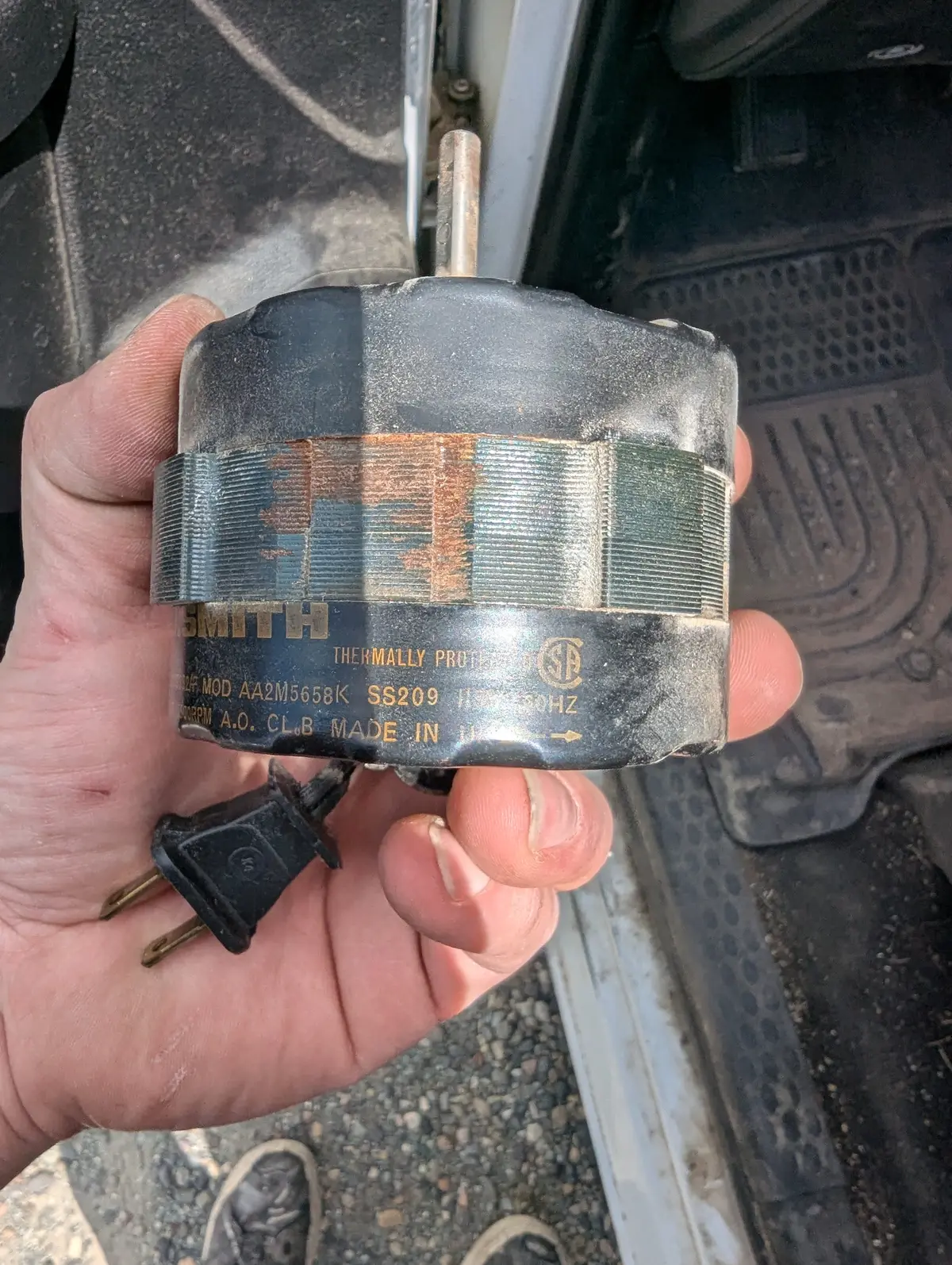
This fan's motor is a plug-in unit: unplug, unclip, clip in the replacement, plug it back in. The housing, duct connection, and ceiling never get touched. Even with the motor's premium price, the total job cost came in under the full-replacement path — and the bathroom ceiling stayed intact.
When the answer flips
This isn't always the call. If the housing is rusted, the duct connection is failing, or the fan is a builder-grade unit whose replacement motor costs three times what it should, full replacement wins — especially if the ceiling is being opened anyway during a renovation. The point isn't "always repair"; it's that the comparison is total job cost, not the price tags on the parts.
The other reason to replace: silence
The repair-vs-replace math changes when the goal isn't just moving air — it's a fan you can't hear. Builder-grade fans are loud enough that people don't run them, and a bathroom fan nobody runs isn't controlling moisture. When a client wants quiet, I install the Panasonic WhisperFit Remodel (FV-0811RF2) almost exclusively: it's purpose-built for retrofits, so it goes into an existing ceiling opening without the drywall surgery, and it's quiet enough that the habit problem disappears.
For planning purposes: fan swaps start at $500 for a basic changeout, and new installs (new location, new ducting) start around $800.
Take the human out of the loop: humidistat control
The quietest fan still does nothing if nobody turns it on — and moisture damage is a when-nobody's-watching problem. A humidistat switch (or a fan with built-in humidity sensing) runs the fan automatically when humidity spikes and shuts it off once the room has dried out. No remembering, no reminding. I recommend it for any household with kids: long showers, closed doors, and a fan that never gets switched on is exactly the recipe that peels ceiling paint and grows mould.
Fan not moving air — or too loud to use? MDN Electric services and replaces exhaust fans across Prince George, and gives you the honest math on which way is cheaper. Book a visit.
Got a problem like this one?
This is what a proper diagnostic looks like: find the actual fault, fix it once, and leave you with straight answers. Based in Prince George, serving northern BC.
Book a diagnostic visit Call (778) 349-9654Common questions
Is it worth repairing a bathroom fan or should I replace it?
Compare the whole job, not the parts: a motor swap leaves the ceiling untouched, while a full fan replacement often means drywall, duct adaptation, and paint. If the housing and duct are sound, the repair frequently wins even when the motor costs more than a new fan.
Why does a replacement fan motor cost more than a whole new fan?
Complete builder-grade fans are mass-produced loss leaders; individual OEM motors are low-volume parts. The motor’s price tag looks worse, but it buys a job with far less labor attached.
How long do bathroom fan motors last?
Typically 10–15 years depending on use and how much moisture they move. A fan that runs long showers daily in a cold climate works harder than the same fan in a powder room.
When is full fan replacement clearly the right call?
Rusted or damaged housing, a failing duct connection, a discontinued fan with unobtainable parts, a fan too loud to actually use, or any time the ceiling is already open during a renovation. Then the labor penalty disappears and the new unit wins.
How much does replacing a bathroom fan cost in Prince George?
With MDN Electric, fan swaps start at $500 for a basic changeout of an existing fan, and new installs — a new location with new ducting — start around $800. For quiet retrofits, the go-to unit is the Panasonic WhisperFit Remodel (FV-0811RF2).

More case studies
- One Dead Fixture, One Still Burning — Replace One or Both? Here's the Math
- The Hot Tub GFCI That Kept Tripping — With No Ground Fault to Find
- Outlet Dead but the Breaker Isn't Tripped? Tracing a Live Junction Box Buried Behind Drywall
- A Breaker That Kept Tripping, Then Total Silence: Post-Mortem of a Melted Receptacle
- New Baseboard Heaters Won't Lower Your Hydro Bill: The Physics of Resistance Heat