residential · Prince George, BC
A Breaker That Kept Tripping, Then Total Silence: Post-Mortem of a Melted Receptacle
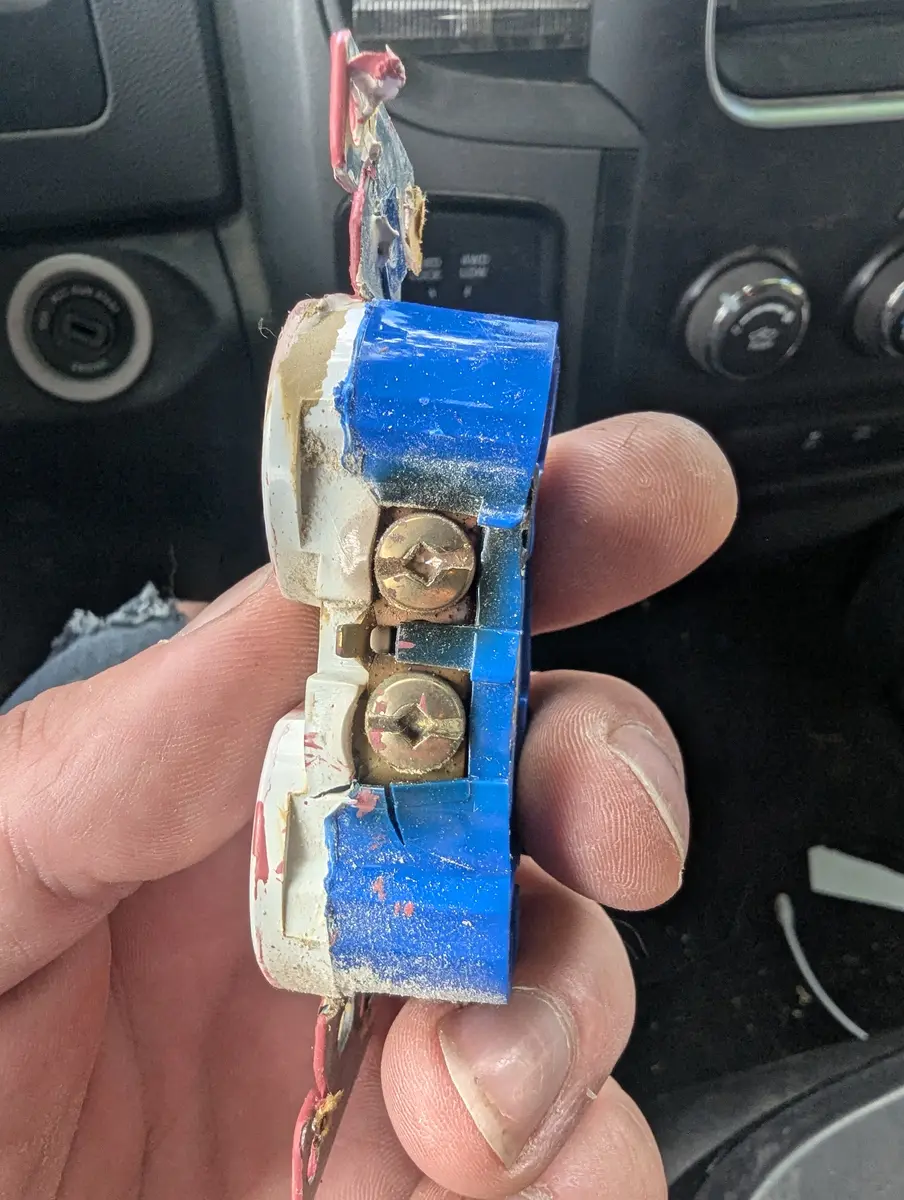
The call: a Prince George homeowner lost all power to the dining room and a nearby bedroom. No breaker tripped, and the panel was delivering power normally. One detail from the homeowner mattered more than everything else: before the rooms went dead, that circuit had been tripping constantly for months.
Reading the symptom
Multiple rooms dead with a healthy breaker almost always means a failed series connection upstream — somewhere, a device that power flows through has burned out and opened the circuit for everything behind it.
I injected a tracer signal (Klein ET450) into the dead circuit and followed it through the walls to a specific receptacle in the living room — a receptacle that still had power on its line side.
The discovery
Pulling that receptacle told the whole story. The back of the device had physically melted. The internal contacts were burned out entirely, which is what severed power to the two rooms downstream.
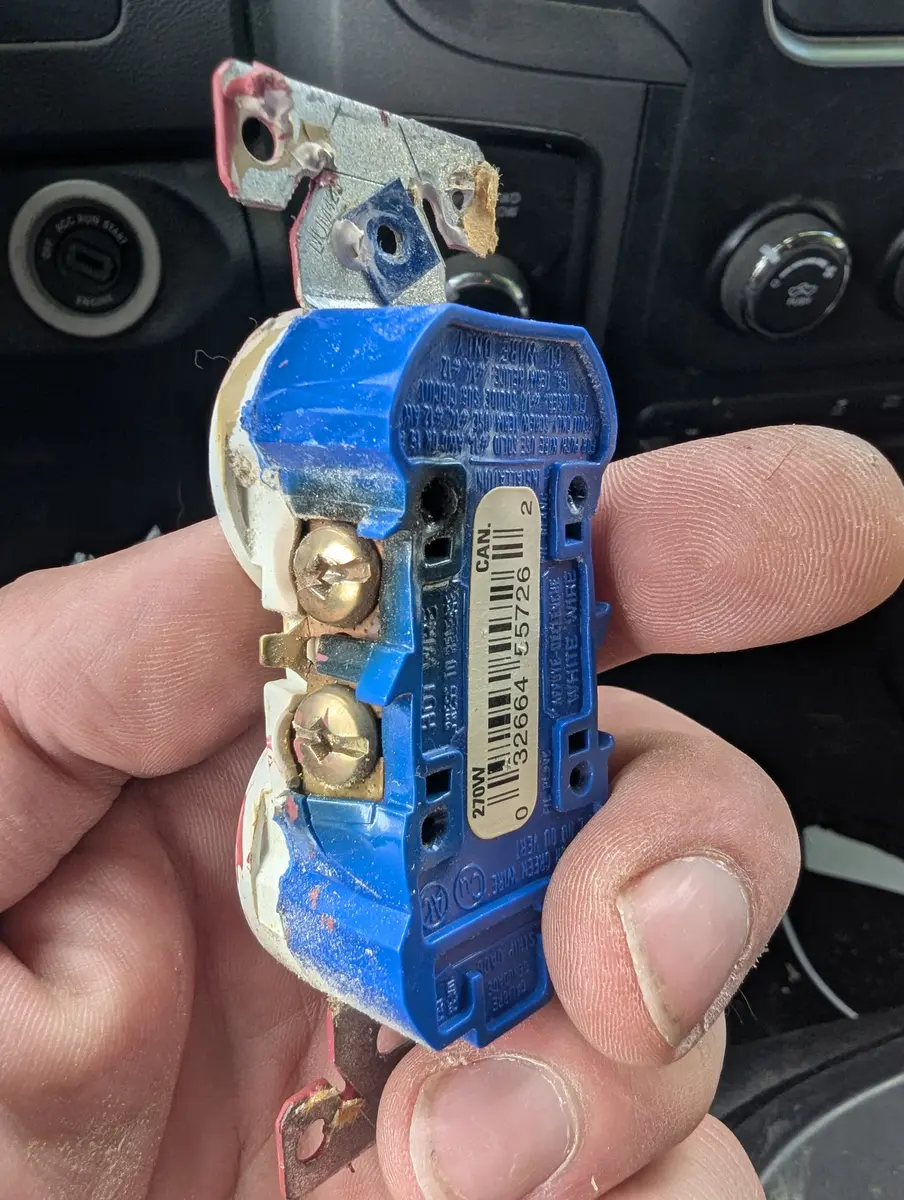
Root cause: two compounding problems
This failure had two parents, and both are common in older Prince George housing stock:
- An overloaded circuit. The living room, dining room, and bedroom were all on one circuit — carrying a TV setup, a portable air conditioner, a fan, a microwave, and chargers simultaneously. That sustained load is what had been tripping the breaker for months. The trips weren't a nuisance; they were the system doing its job.
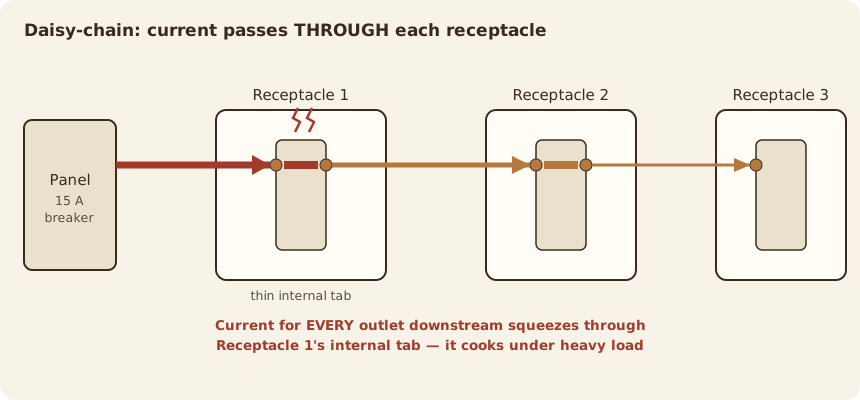
- Daisy-chained wiring. The original wiring fed downstream rooms through the receptacle's internal stab tabs rather than around them. Every amp for three rooms squeezed through the thin internal contacts of one living-room plug. Sustained heavy load, heat cycling, plastic fatigue — and eventually the contact melted open.
Here's the difference in one picture. In a daisy-chain, the receptacle's internal tab is the circuit — the current for every outlet downstream passes through it:
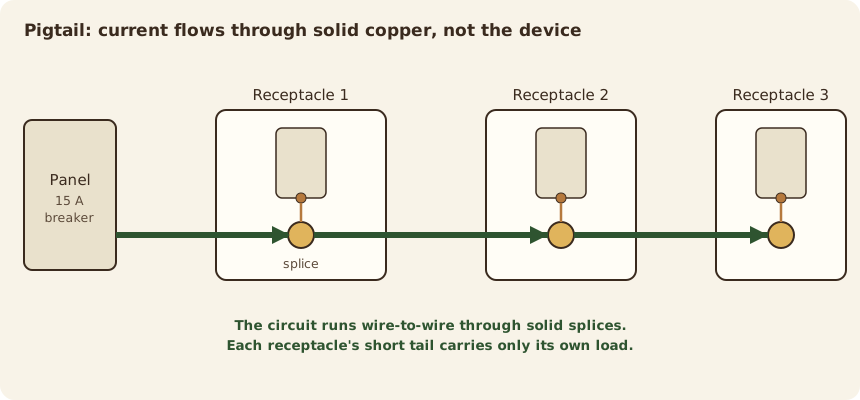
With pigtails, the circuit runs wire-to-wire through solid splices, and each device carries only the load actually plugged into it:
The repair — and the upgrade that matters
I removed the melted device and installed a new receptacle, but wired it with a pigtail connection: the circuit conductors are spliced together in the box, with a short tail feeding the device. Downstream load now flows through continuous copper, not through the receptacle's internals. A future device failure becomes an inconvenience at one outlet instead of an outage for three rooms — or a fire.
I also recommended pigtailing the remaining daisy-chained receptacles and, more importantly, splitting the three rooms onto dedicated circuits sized for how the family actually lives. The 1970s never planned for a portable AC and a microwave on a bedroom circuit.
The lesson
A breaker that trips repeatedly is not a faulty breaker. It is a warning with a deadline. This circuit gave months of warnings, and when nobody acted, the weakest connection in the chain melted. The homeowner got lucky — the failure opened the circuit instead of igniting the wall.
Got a problem like this one?
This is what a proper diagnostic looks like: find the actual fault, fix it once, and leave you with straight answers. Based in Prince George, serving northern BC.
Book a diagnostic visit Call (778) 349-9654Common questions
Is it bad if my breaker keeps tripping?
Yes — repeated tripping means the circuit is overloaded or has a failing connection. The breaker is protecting you. Resetting it over and over while ignoring the cause is how outlets melt and fires start.
Why did rooms go dead when no breaker was tripped?
In many older homes, power for downstream rooms flows through each outlet's internal contacts. When one of those outlets burns out, everything past it loses power even though the breaker stays on.
What is a pigtail connection and why does it matter?
Pigtailing splices the circuit wires together inside the box with a short tail to the outlet, so downstream power flows through solid copper instead of the outlet's thin internal parts. It removes the most common failure point in daisy-chained wiring.
Should I replace my breaker with a bigger one to stop the tripping?
Never. The breaker size protects the wire in your walls. A bigger breaker lets the wire overheat before anything trips — that converts a nuisance into a fire risk. Fix the overload instead.

More case studies
- One Dead Fixture, One Still Burning — Replace One or Both? Here's the Math
- The Hot Tub GFCI That Kept Tripping — With No Ground Fault to Find
- Bathroom Fan Repair vs. Replace: Why the Expensive Motor Was the Cheaper Job
- Outlet Dead but the Breaker Isn't Tripped? Tracing a Live Junction Box Buried Behind Drywall
- New Baseboard Heaters Won't Lower Your Hydro Bill: The Physics of Resistance Heat